

Cathay Business
There are 2 versions of Cathay Pacific A330-300 business class
Compare versions →
Cathay Pacific's primary A330-300 business class uses the Safran Cirrus II reverse-herringbone seat in a 1-2-1 layout. Every seat has direct aisle access; the seat converts to a fully lie-flat bed approximately 75 inches (191 cm) long. A side-folding panel widens the sleeping surface. There is no privacy door, but the high shell and wing-shaped head panel provide a meaningful sense of enclosure. The cabin is split into a larger forward section and a smaller aft section. Because the A330-300 has a narrower fuselage than the Boeing 777-300ER, the ottoman and overall footprint feel somewhat tighter than on the 77W or A350-900, though the core seat product is the same Cirrus family. StudioCX IFE runs on Panasonic eX2 hardware; satellite Wi-Fi is available. A second sub-fleet carries a 2-2-2 angled-flat recliner product on higher-density regional configurations; this product describes the dominant 1-2-1 Cirrus II long-haul fleet (roughly 25 of 44 A330-300 aircraft).
Cabin Highlights
- ✓Safran Cirrus II reverse-herringbone in 1-2-1 layout
- ✓Fully lie-flat ~75-inch (191 cm) bed
- ✓Direct aisle access from every seat
- ✓Side-folding panel widens the sleeping surface
- ✓StudioCX IFE on Panasonic eX2 hardware with satellite Wi-Fi
- ✓Same Cirrus seat family as the Cathay A350-900 and 77W legacy fleet
Seat Dimensions
Strategic Seating
- Front rows of either cabin section — less foot traffic and no recline intrusion from ahead
- Window seats in the forward cabin for a balance of privacy and natural light
- Last row of the forward cabin — closest to divider and crew jumpseats
- Aft mini-cabin rows adjacent to galley and lavatory traffic
- Seat 20K (or equivalent last aft-cabin window) — closet placement feels claustrophobic per passenger reports
How to book this cabin
Airlines may change equipment at any time. To ensure you get the A330-300 (333), always check the seat map during and after booking.
Look for these hints:
- Look for "A330-300" or "333"
- Reverse-herringbone seats in 1-2-1: window seats angle toward windows, centre pairs angle toward each other
- Wing-shaped privacy panel beside the head — no door
- Side panel folds up to extend the sleeping surface
- Two-cabin split: larger forward J cabin and smaller aft J cabin
- Narrower feel than 77W/A350-900 variants due to the A330-300 fuselage width
- Entertainment screen pops out from the seat in front
Routes Where It Flies
Chance of Cathay Business across aircraft types, based on tracked Cathay Pacific flights on each route.
Auckland – Hong Kong
100% on other aircraft
Dallas-Fort Worth – Hong Kong
100% on other aircraft
Hong Kong – Chicago
100% on other aircraft
Hong Kong – Seattle
100% on other aircraft
Hong Kong – New York City
95% on other aircraft
Mumbai – Hong Kong
94% on other aircraft
Hong Kong – Toronto
92% on other aircraft
Hong Kong – Melbourne
76% on other aircraft
Hong Kong – Los Angeles
74% on other aircraft
New Delhi – Hong Kong
1% on this aircraft · 73% on other aircraft
Hong Kong – Singapore
32% on this aircraft · 40% on other aircraft
Hong Kong – Sydney
67% on other aircraft
Hong Kong – San Francisco
63% on other aircraft
Hong Kong – London
60% on other aircraft
Hong Kong – Vancouver
50% on other aircraft
Hong Kong – Tokyo
20% on this aircraft · 24% on other aircraft
Hong Kong – Taipei (Taoyuan)
24% on this aircraft · 21% on other aircraft
Hong Kong – Osaka
22% on this aircraft · 18% on other aircraft
Hong Kong – Manila
22% on this aircraft · 15% on other aircraft
Hong Kong – Kuala Lumpur
29% on this aircraft
Bangkok – Hong Kong
21% on this aircraft · 7% on other aircraft
Hong Kong – Seoul
23% on this aircraft · 1% on other aircraft
Jakarta – Hong Kong
18% on this aircraft
External Sources
- https://aerolopa.com/aircraft/airbus-a330-300
- https://aerolopa.com/cx-33e
- https://aerolopa.com/cx-33j
- https://aerolopa.com/cx-33k
- https://onemileatatime.com/review/cathay-pacific-a330-business-class
- https://liveandletsfly.com/cathay-pacific-a330-business-class
- https://news.cathaypacific.com/cathay-pacific-announces-2011-annual-results-171459
More from Cathay Pacific
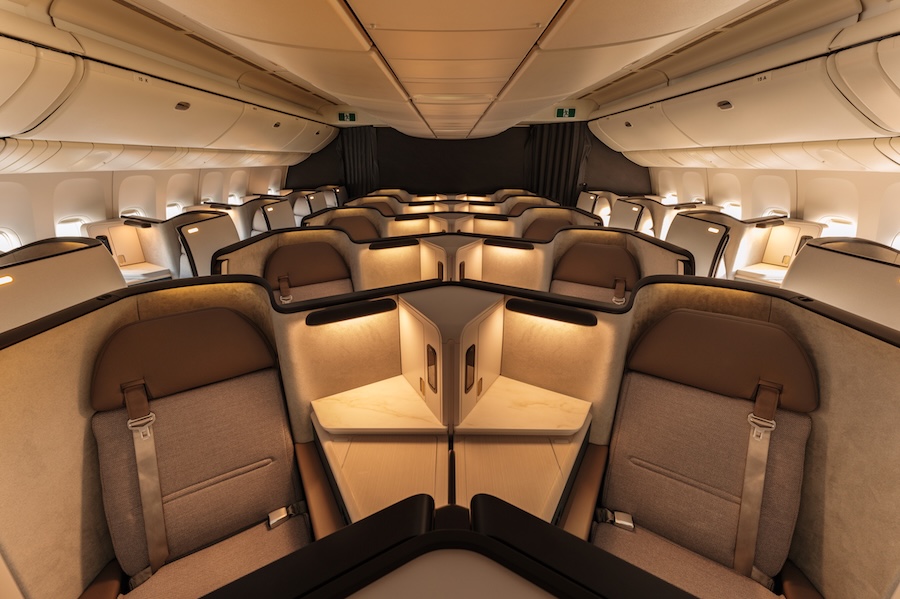 Aria SuiteBusiness · Boeing 777-300ER (77W)9.1Cathay BusinessBusiness · Boeing 777-300ER (77W)8.1Cathay BusinessBusiness · Airbus A350-900 (359)8.0Cathay BusinessBusiness · Airbus A350-1000 (351)8.0
 Cathay Business (Regional)Business · Airbus A330-300 (333)4.6
 Cathay BusinessBusiness · Boeing 777-300 (773)4.5
Similar business class cabins
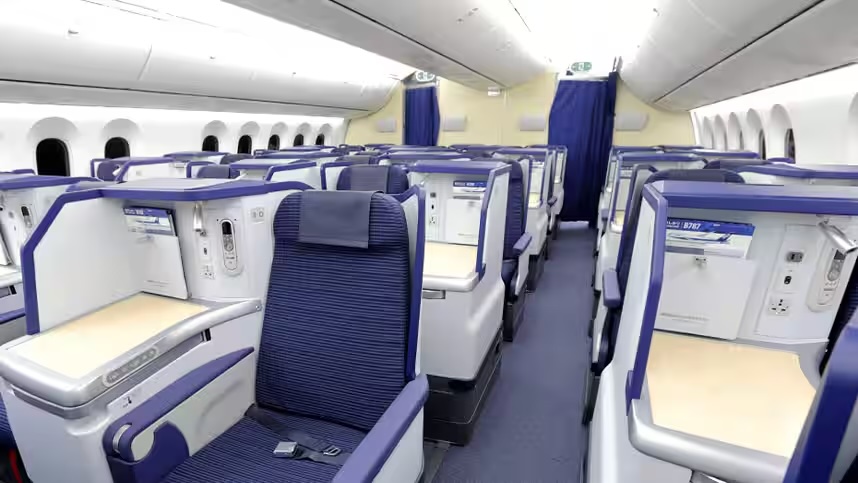 ANA BusinessBusiness · Boeing 787-9 (789)8.0
 JAL SKY SUITE IIBusiness · Boeing 767-300ER (763)8.0
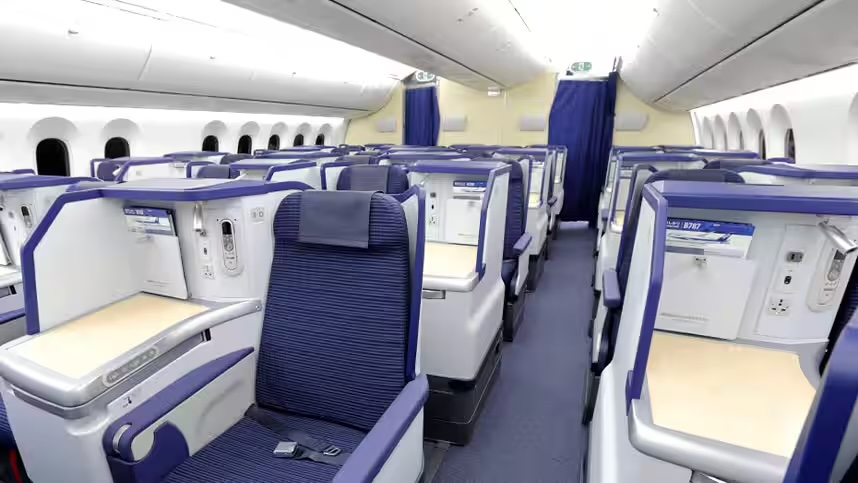 ANA Business StaggeredBusiness · Boeing 787-8 (788)8.0
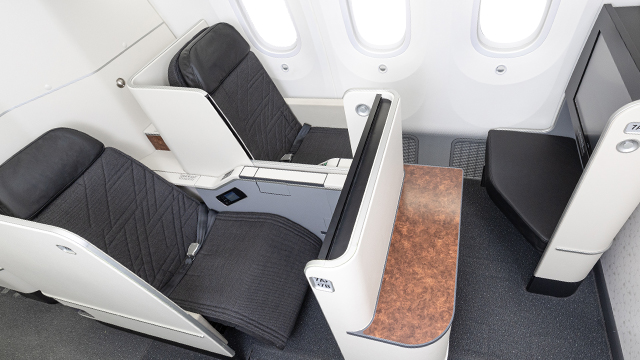 Prestige Class (Prestige Suites)Business · Airbus A330-300 (333)8.0Prestige Class (Apex Suite)Business · Boeing 787-9 (789)8.0
 Delta OneBusiness · Boeing 767-300ER (763)8.1